
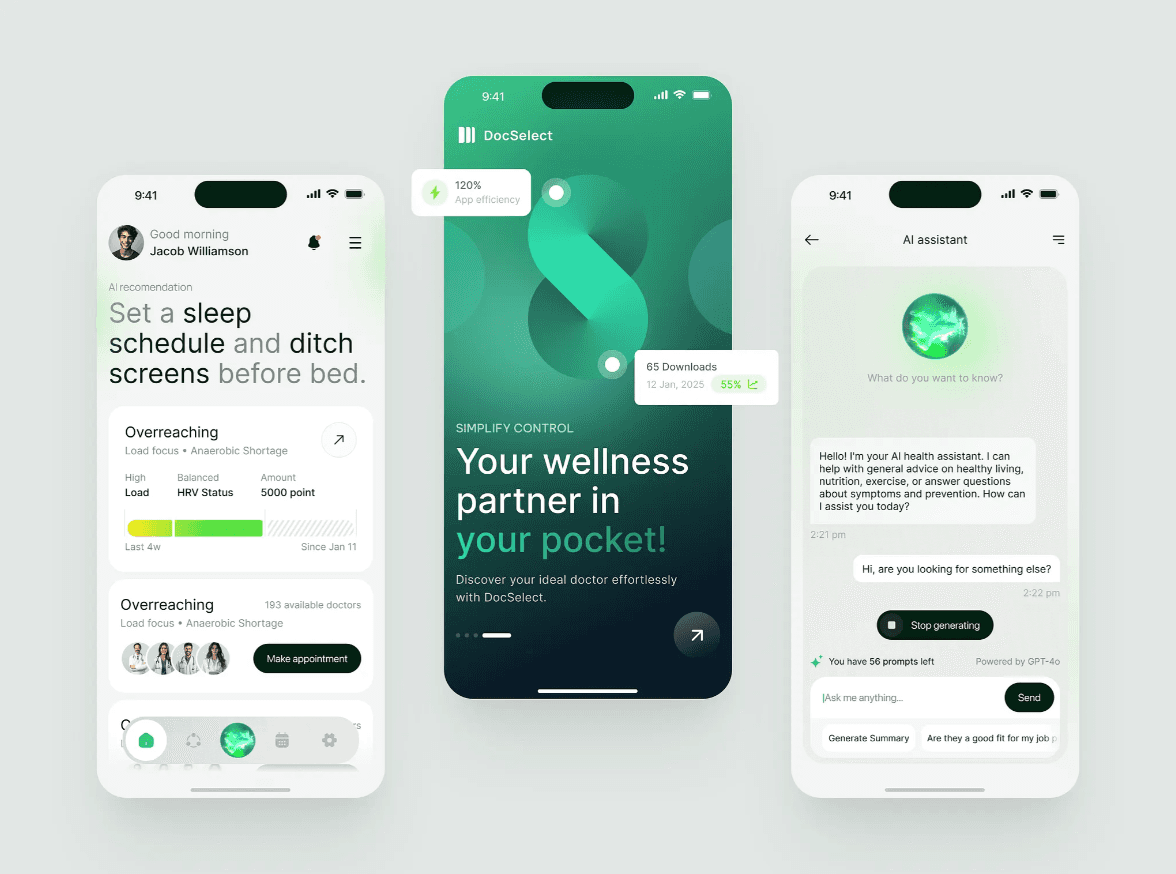
This section highlights the deliberate choices in color palettes, typography, and layout used to define the unique personality of each application while ensuring clarity.
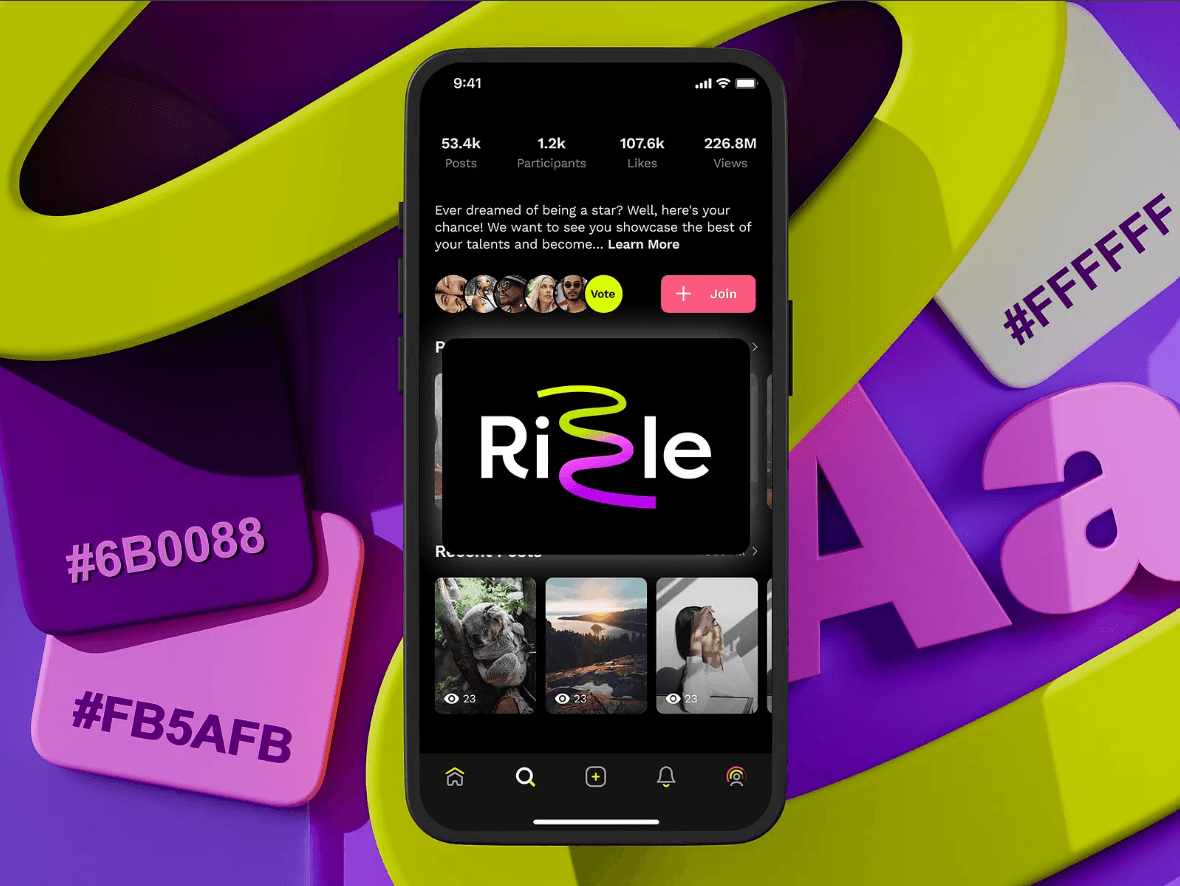
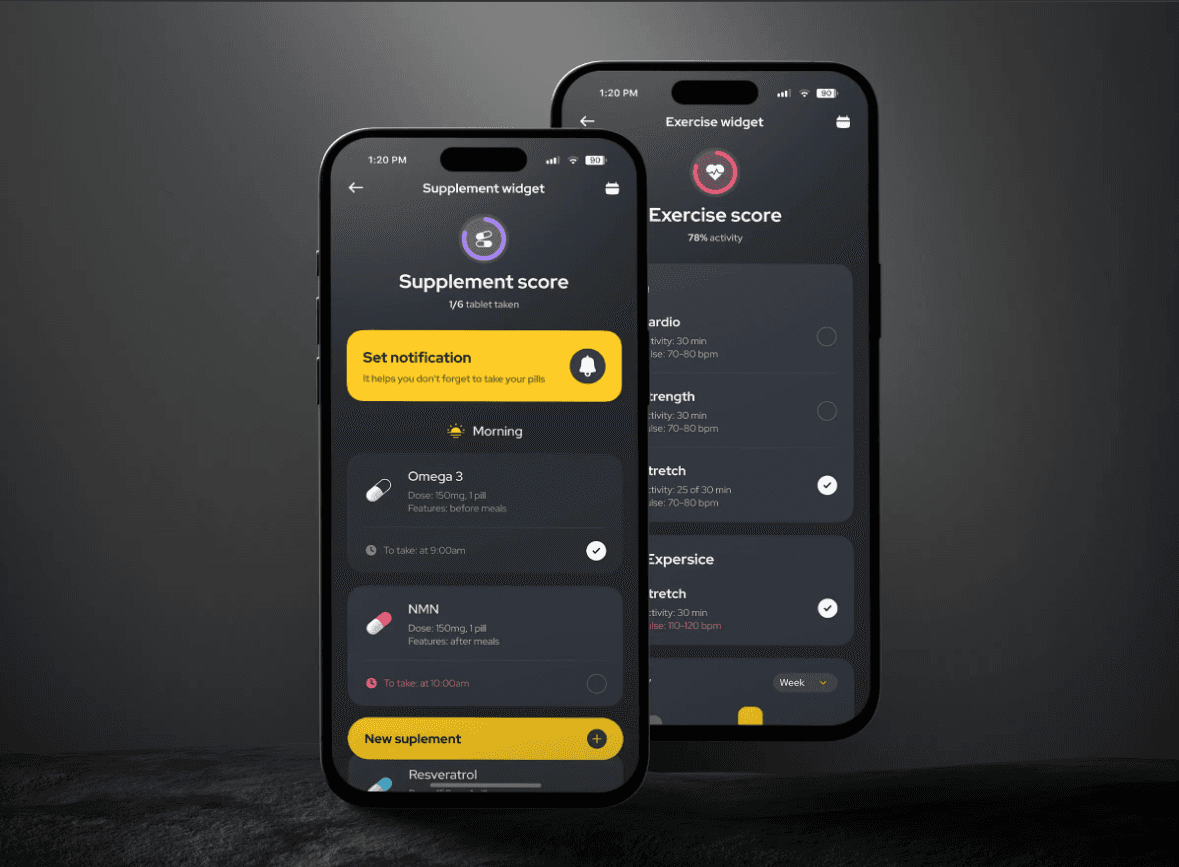
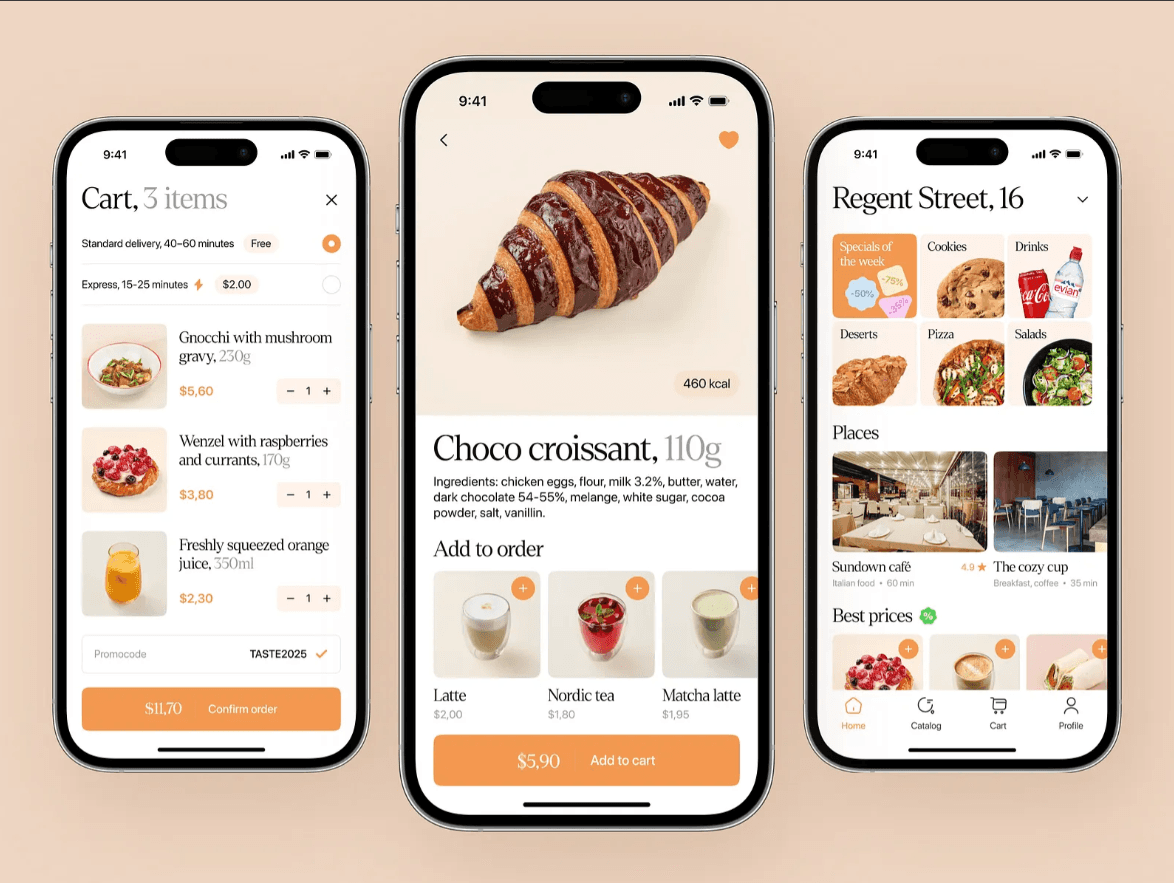
Color & Theme: Discussing the application of distinct themes—the vibrant, high-contrast look for the Talent Platform, the warm, minimalist tones for the Food Ordering App, the clean white space for the Job Search App, and the focused dark mode for the Health Widgets.
Visual Guiding Principles: Analyzing how visual hierarchy (e.g., using large headings, bold CTAs, and strategic color splashes) guides the user's eye directly to the most critical information, promoting scannability and quick decision-making.
Iconography & Imagery: Showcasing the use of custom and standardized iconography to enhance meaning and efficiency, such as the clear status symbols in the wellness app and the product imagery in the food app.
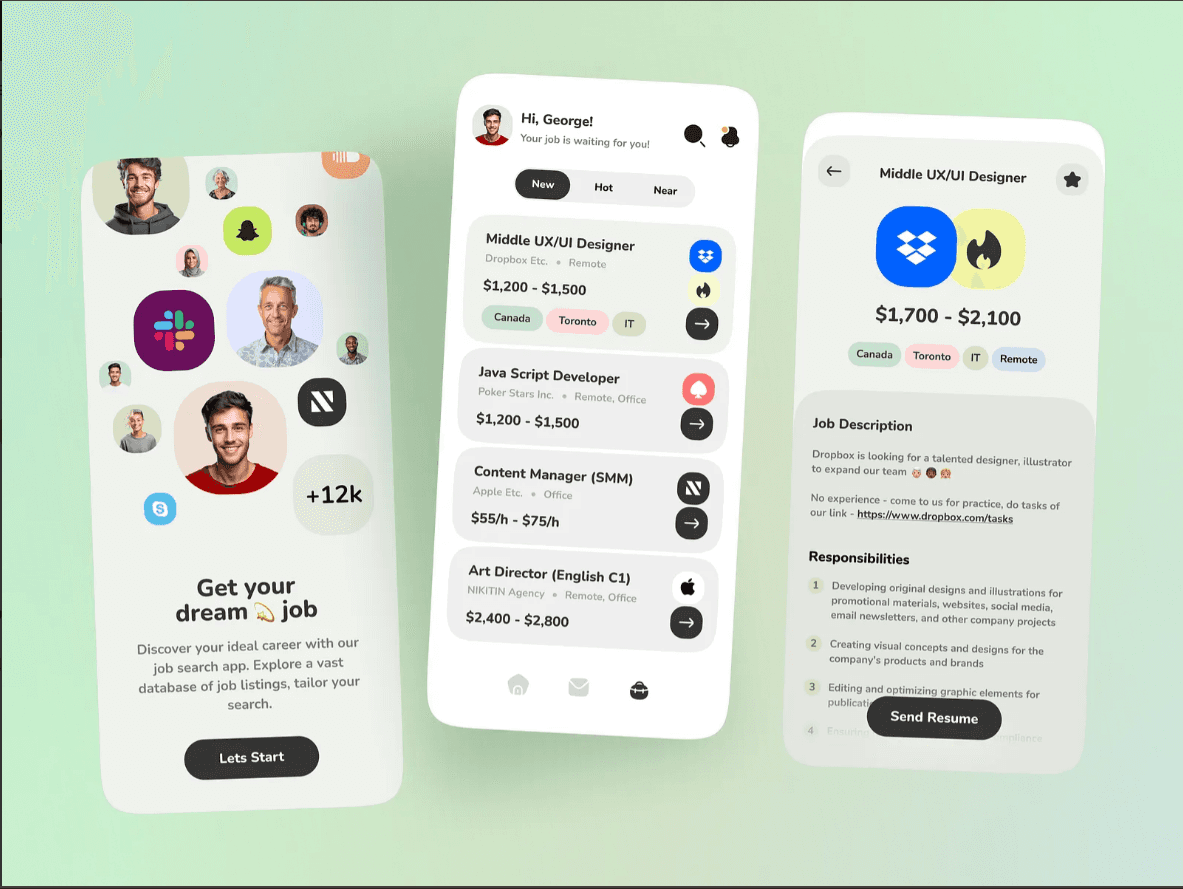
This section dives into the practical application of UI/UX best practices to ensure an intuitive and effortless user experience across all product types.
Optimizing Core Flows: Reviewing how crucial interactions—such as adding an item to a cart, sending a resume, or setting a reminder—are streamlined to be completed in the minimum number of taps (e.g., the quick add/subtract buttons in the food cart).
Information Density & Context: Detailing the strategic presentation of complex data (e.g., HRV scores, exercise breakdown, or job responsibilities) in easily digestible chunks using cards, lists, and modal interfaces.
Accessibility and Responsiveness: Addressing design considerations for diverse users, including ensuring sufficient color contrast (especially in the dark mode design) and creating layouts that function effectively on various screen sizes and orientations.
Ayodeji
Chief Executive Officer, Four Seasons Vodka